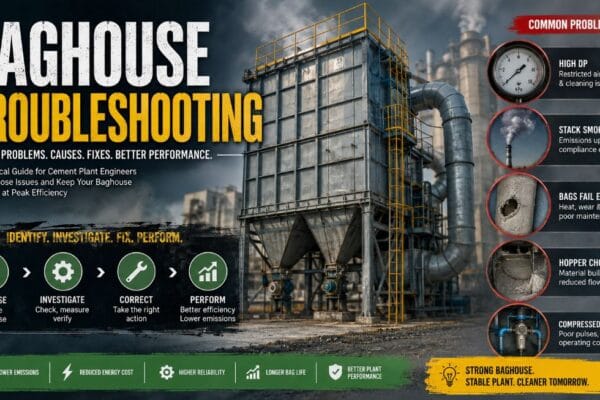
Baghouse troubleshooting infographic for cement plants

Common Baghouse Problems in Cement Plants and Their Solutions

An engineer’s reference for identifying, investigating, and correcting baghouse performance issues Even a well-designed baghouse will experience performance issues over time. In cement plants, these issues are typically identified through rising Differential Pressure (DP), unstable mill ventilation, increasing stack emissions, higher fan power consumption and frequent filter bag failures. While the immediate response is often…
Read More
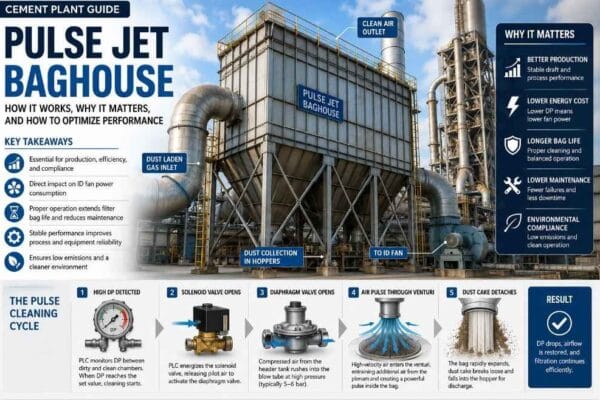
Pulse jet vs reverse air baghouses

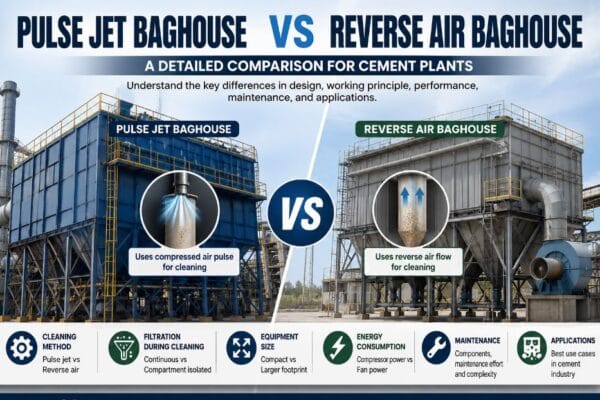
Pulse Jet Baghouse vs Reverse Air Baghouse

Working Principle, Differences, Advantages & Which One Is Better? Baghouses are one of the most critical pieces of equipment in a cement plant. While their primary purpose is to capture dust before process gases are released into the atmosphere, they also play a major role in maintaining stable airflow, reducing fan power consumption, extending filter…

Read More
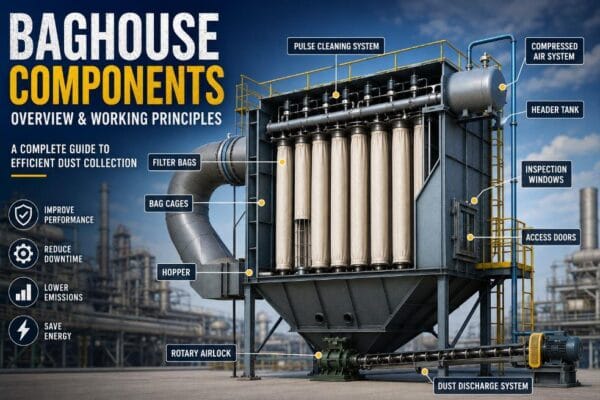
Complete Guide to Baghouse Components, Failure Mechanisms & Maintenance

Baghouse Optimization in Cement Plants (Part 2)

Complete Guide to Pulse Jet Baghouse Components, Failure Mechanisms & Maintenance A Pulse Jet air baghouse performs efficiently only when all its components work together as designed. However, when baghouse performance starts to decline, the first response in many cement plants is often to increase pulse cleaning frequency or raise compressed air pressure. While these…

Read More
TheUltimateGuidetoBaghouseOptimizationinCementPlants

Baghouse Optimization in Cement Plants (Part-1)

Introduction, Importance, Working Principle & Process Flow A cement plant is full of large equipment such as kilns, preheaters, grinding mills and high-capacity fans. Since these machines directly produce clinker and cement, they usually receive the most attention. However, one of the most important systems often works quietly in the background – “Baghouse“. Many people…

Read More
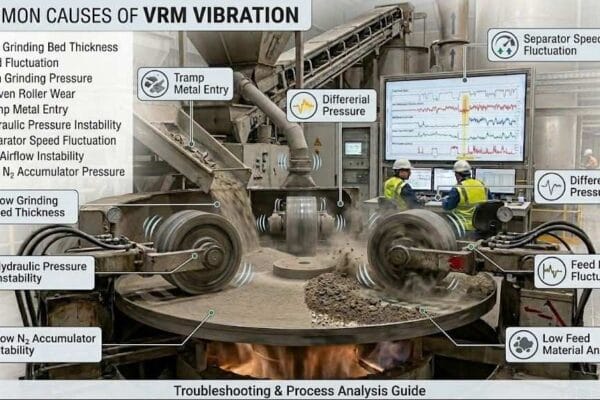
COMMON CAUSES OF VRM VIBRATION

Common Causes of Vibration in Vertical Roller Mills (VRM)

Understanding Process and Mechanical Causes of VRM Vibration for Stable, Efficient and Trouble-Free Mill Operation Introduction Anyone who has operated a Vertical Roller Mill (VRM) knows that maintaining stable operation is often more challenging than achieving high production. During cement plant operations, vibration is one of the most common issues that can directly affect mill…

Read More
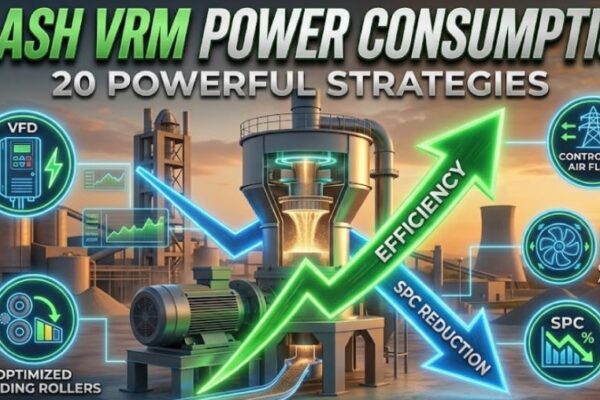
Vertical Raw Mill Optimization for Energy Savings and Higher Output

Vertical Raw Mill Optimization for Energy Savings and Higher Output

Reducing Specific Power Consumption (SPC) in Vertical Raw Mills (VRM) is a critical lever for enhancing cement plant profitability. This comprehensive guide explores 20 field-tested strategies—ranging from grinding bed stabilization and false air control to advanced VFD integration—designed to slash energy costs. Accompanied by a real-world case study, learn how precision tuning and technical optimization can lead to significant annual savings and operational excellence.

Read More
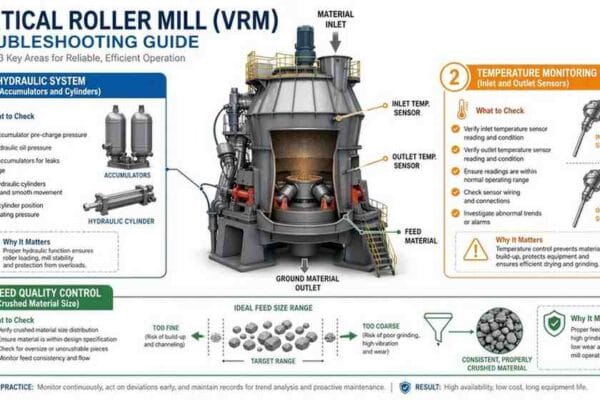
VRM Process Control And Optimization Cement Plants

VRM Optimization in Cement Plant: Reduce kWh & Mill Vibration

Common VRM Operational Problems Affecting Grinding Efficiency, Output, and Stability Vertical Roller Mills (VRMs) are highly efficient grinding systems widely used in industries such as cement, mining, and power generation. They are known for their energy efficiency and high throughput in grinding various materials. However, like any complex machinery, VRMs can encounter operational challenges if…

Read More
Cement AI Floating Chat
👷 Hello! Need Help?