Why Your Vertical Raw Mill Is Consuming Excess Power – 20 Practical Solutions
Table of Contents
The Vertical Raw Mill (VRM) stands as a cornerstone in the modern cement industry, revolutionizing the grinding process of raw materials. Its advanced design and operational efficiency have made it an indispensable asset for cement manufacturers globally. This comprehensive article delves into the intricate details of the Vertical Raw Mill, exploring its working principle, key components, significant advantages, and its pivotal role in achieving substantial Specific Power Consumption (SPC) reduction.
What is a Vertical Raw Mill?
A Vertical Raw Mill is a type of grinding equipment primarily used in the cement industry to pulverize raw materials such as limestone, clay, and iron ore into a fine powder known as raw meal. Unlike traditional grinding methods, VRMs utilize a combination of compression, shear, and impact forces to achieve superior grinding efficiency and fineness. This technology is crucial for preparing the raw mix that feeds into the kiln, directly impacting the quality and consistency of the final cement product.
The Ingenious Working Principle of VRMs
The operation of a Vertical Raw Mill is a sophisticated process designed for continuous and efficient grinding. Raw materials are fed into the center of a rotating grinding table. Simultaneously, grinding rollers, typically three or four, apply immense pressure onto the material bed on the table. The hydraulic loading system ensures optimal grinding pressure, which can be adjusted based on the material’s hardness and desired fineness. As the grinding table rotates, centrifugal force pushes the material outwards, where it is ground between the rollers and the table.
Hot gases from the kiln or a separate hot gas generator are introduced into the mill, serving two critical functions: drying the raw materials (especially those with high moisture content) and conveying the finely ground particles upwards. An integrated high-efficiency separator classifies the material; fine particles are carried out of the mill by the gas stream as finished product, while coarser particles are returned to the grinding table for further comminution. This closed-circuit grinding system ensures consistent product quality and maximizes grinding efficiency.
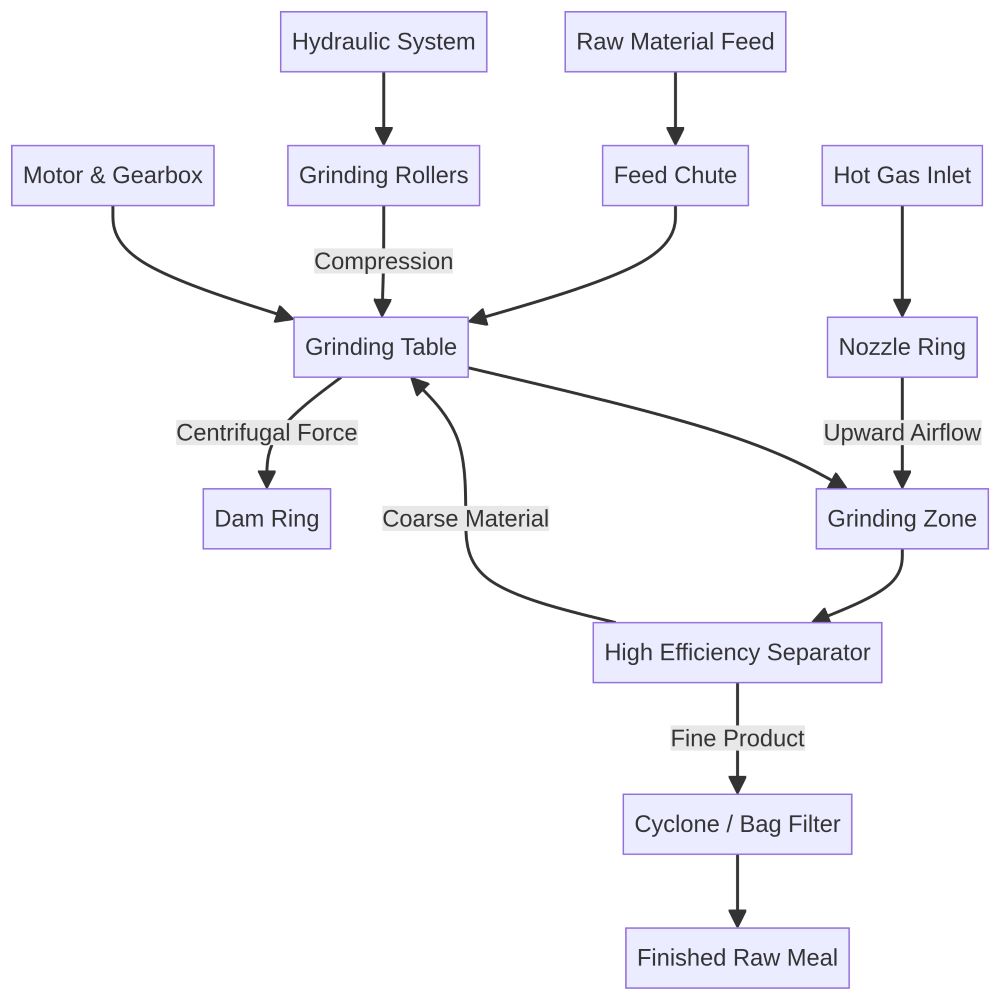
Figure 1: Simplified Process Flow Diagram of a Vertical Raw Mill
Key Components of a Vertical Raw Mill
A Vertical Raw Mill comprises several integral components that work in synergy to achieve its grinding objectives:
- Grinding Table: A large, rotating disc where the raw material is fed and ground.
- Grinding Rollers: Heavy rollers that apply pressure to the material on the grinding table, performing the actual grinding action.
- Hydraulic Loading System: Provides and adjusts the necessary pressure for the grinding rollers, ensuring efficient material comminution.
- Separator: An internal or external component that classifies the ground material, returning coarse particles for re-grinding and allowing fine particles to exit as product.
- Nozzle Ring: Directs hot gas into the grinding zone, facilitating drying and material transport.
- Gearbox and Motor: Provide the rotational power for the grinding table and the overall drive for the mill.
- Housing: Encloses the grinding mechanism, providing structural integrity and containing the grinding environment.
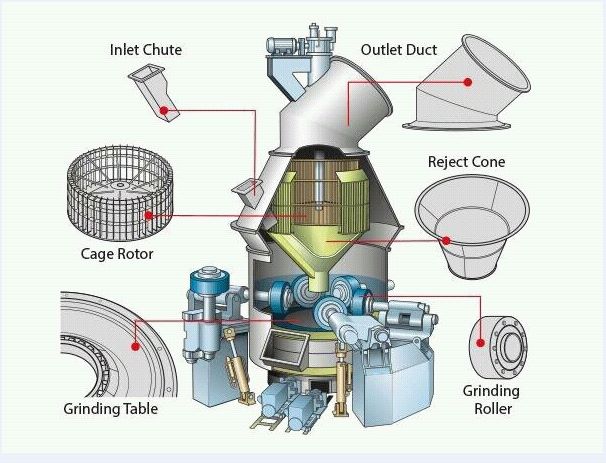
Figure 2: Labeled Diagram of Vertical Raw Mill Components
Unmatched Advantages of Vertical Raw Mills
Vertical Raw Mills offer a multitude of advantages over conventional grinding technologies, particularly in the context of cement production:
- Superior Energy Efficiency: VRMs are renowned for their significantly lower Specific Power Consumption (SPC) reduction, typically consuming 30-50% less energy compared to ball mills for the same grinding task. This is primarily due to the efficient material bed grinding principle and the direct application of grinding forces.
- High Drying Capacity: The ability to utilize hot gases directly within the mill allows VRMs to efficiently dry raw materials with high moisture content (up. to 15%) while simultaneously grinding them. This eliminates the need for separate drying equipment, simplifying the process and reducing overall energy consumption.
- Integrated Operations: VRMs combine crushing, drying, grinding, and classification into a single unit. This integration leads to a more compact plant layout, reduced equipment footprint, and simplified process flow.
- Environmentally Friendly: Operating under negative pressure, VRMs minimize dust emissions, contributing to a cleaner working environment. Additionally, their lower noise levels (20-25 dB less than ball mills) improve workplace conditions.
- Consistent Product Quality: The closed-circuit grinding with an integrated separator ensures a stable chemical composition and uniform particle size of the raw meal, which is crucial for a consistent clinkerization process in the kiln.
- Low Wear and Maintenance: The grinding rollers do not directly contact the grinding table, reducing wear on grinding elements. The use of wear-resistant materials and accessible designs simplifies maintenance, extending the lifespan of components and reducing downtime.
- Operational Flexibility: VRMs can quickly adapt to changes in raw material characteristics and production demands, allowing for easy adjustment of operational parameters to meet different cement production requirements.
Vertical Raw Mill vs. Ball Mill: A Comparative Analysis
For decades, ball mills were the standard for raw material grinding. However, Vertical Raw Mills have emerged as a superior alternative, particularly concerning energy efficiency and operational benefits. The table below highlights key differences:
| Feature | Vertical Raw Mill (VRM) | Ball Mill |
| Grinding Principle | Compression, shear, impact on material bed | Impact and attrition by grinding media |
| Energy Consumption | 30-50% lower SPC | High |
| Drying Capability | Excellent (integrated hot gas) | Limited (requires separate dryer) |
| Footprint | Compact, integrated system | Larger, requires multiple units |
| Noise Level | Lower (20-25 dB less) | Higher |
| Dust Emission | Minimal (negative pressure operation) | Higher (positive pressure operation) |
| Product Fineness Control | Excellent (integrated separator) | Good (external separator often needed) |
| Wear Rate | Lower | Higher |
| Maintenance | Easier access, longer component life | More complex, frequent media replacement |
20 Deep-Dive Strategies for Vertical Raw Mill SPC Reduction
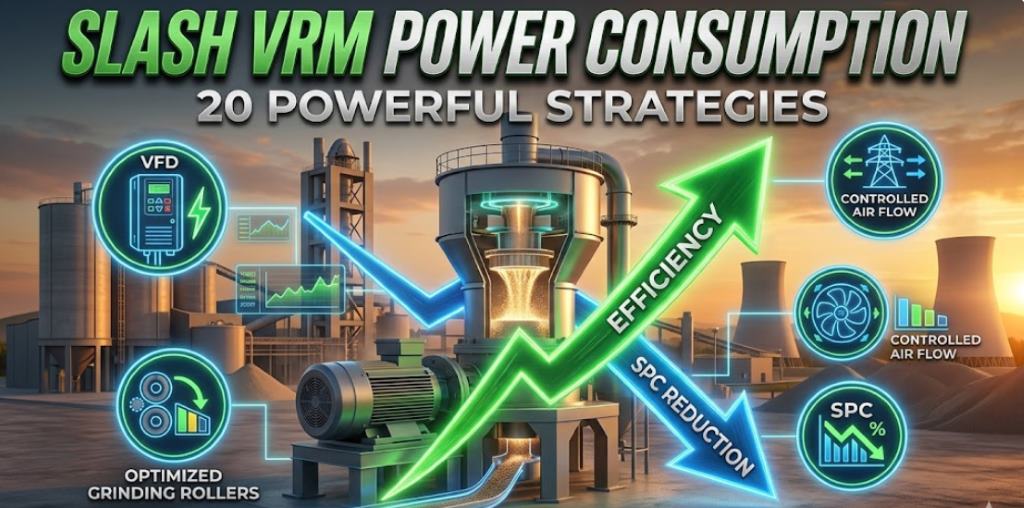
To maximize the efficiency of a Vertical Raw Mill, operators must focus on both technical and operational optimizations. Below are 20 proven methods to achieve significant Specific Power Consumption (SPC) reduction:
Operational & Mechanical Optimization
- Dam Ring Height Optimization: Adjust the dam ring height based on feed material characteristics to stabilize the material bed thickness. An optimal bed prevents vibration and ensures efficient grinding.
- Grinding Roller Pressure Tuning: Optimize hydraulic pressure according to material hardness. Excessive pressure leads to unnecessary power consumption, while insufficient pressure results in poor grinding efficiency.
- Nozzle Ring Area Adjustment: Modify the nozzle ring area to maintain ideal air velocity. This ensures that internal circulation is optimized, reducing the load on the mill fan.
- Timely Liner Maintenance: Worn-out table and roller liners reduce the effective grinding surface. Regular hard-facing and maintenance are essential to maintain grinding efficiency.
- False Air Sealing: Ensure 100% sealing of mill doors, expansion joints, and flap valves. Leakages force the mill fan to work harder, increasing power consumption.
- Separator Vane Angle Optimization: Align the dynamic separator vane angle and speed to minimize bypass, ensuring that fines do not return to the table for unnecessary re-grinding.
- Precise Water Spray Management: Use water spray strictly for vibration control. Excessive water increases the drying load and significantly raises fan power requirements.
- Feed Size Control: Maintain a consistent and small feed size (uniform PSD). A stable feed allows the Vertical Raw Mill to operate smoothly at its peak efficiency point.
- Hot Gas Duct Design: Minimize sharp bends in the ducting to reduce pressure drops. Lower resistance directly translates to reduced load on the process fans.
- Material Level in Feed Bin: Keep the feed bin filled at all times to prevent “False Air Entry” through the feed point, which can disrupt the mill’s internal atmosphere.
Electrical & Automation Upgrades
- VFD on Mill Fan: The mill fan is often the largest power consumer. Installing a Variable Frequency Drive (VFD) allows air flow management based on actual load rather than using inefficient dampers.
- High-Efficiency Motors: Replace legacy motors with IE3 or IE4 category high-efficiency motors to reduce electrical losses significantly.
- Expert Control Systems (AI/Fuzzy Logic): Deploy AI-based tools that eliminate human error and keep the mill running at its “Optimal Point” continuously.
- Differential Pressure (DP) Monitoring: Keep the mill DP within a tight range. High DP indicates excessive internal circulation, leading to substantial fan power loss.
- Separator Motor VFD: Control separator speed using a VFD to match product fineness requirements precisely, avoiding over-speeding and wasted energy.
Process & Strategic Improvements
- Strategic Use of Grinding Aids: Use specialized chemicals to improve material flow and prevent “coatings” from forming on the grinding table, which can hinder efficiency.
- Optimizing Circulating Load: Maintain a precise balance between rejects and fines to prevent the mill from being over-loaded or under-utilized.
- Moisture Control in Feed: High moisture in feed material increases the drying load. Use covered storage or pre-drying techniques to manage moisture levels before the material enters the Vertical Raw Mill.
- Mill Start-Stop Optimization: Minimize frequent trips and restarts. Power consumption peaks during the startup phase, so stable, continuous operation is key to low SPC.
- Regular Energy Audits: Conduct frequent thermal and electrical audits to pinpoint energy leaks and identify specific areas for further optimization.
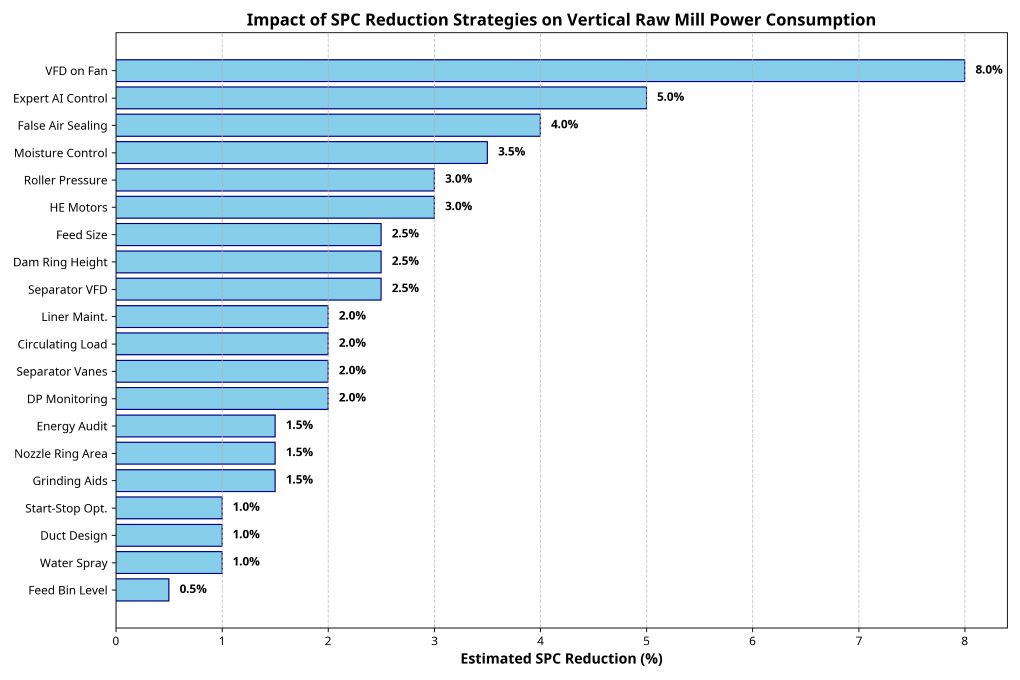
Figure 3: Estimated SPC Reduction (%) for various strategies in a Vertical Raw Mill.
Case Study: Optimizing Circuit Pressure Drop for Enhanced Fan Efficiency
In In this technical intervention, we targeted the Vertical Raw Mill (VRM) circuit resistance by focusing on the aerodynamic efficiency of the cyclone discharge. By installing Guide Vanes in the cyclone outlet ducts, we successfully reduced the system’s combined pressure drop from 150 mmWG to 110 mmWG, resulting in substantial energy savings.
The Challenge: Turbulence and Exit Losses
The mill was operating at a high circuit pressure drop of 150 mmWG. Internal audits identified that a significant portion of this resistance was due to “exit losses” at the cyclone discharge. The air-material flow was experiencing high turbulence and spinning losses as it transitioned from the cyclone body to the outlet duct, forcing the Mill Fan (Process Fan) to work harder to maintain the required flow rate.
Technical Intervention: Guide Vane Installation
To streamline the flow and recover pressure energy, we implemented the following engineering solution:
- Outlet Guide Vanes: Specialized guide vanes were engineered and installed inside the cyclone outlet ducts. These vanes “straighten” the spinning (vortex) flow of the air as it exits the cyclone.
- Reduced Kinetic Energy Loss: By converting the rotational energy of the air into linear pressure, the guide vanes minimized the turbulence at the transition point.
- Balanced Flow Distribution: The modification ensured a more uniform velocity profile in the discharge ducting, directly lowering the “back-pressure” on the entire grinding circuit.
Results and Performance Impact
| Parameter | Baseline (Before) | Optimized (After) |
| Circuit Pressure Drop ($\Delta P$) | 150 mmWG | 110 mmWG |
| Pressure Drop Reduction | — | 40 mmWG |
| Mill Fan Power Consumption | 2,450 kW | 2,240 kW |
| Direct Power Savings | — | 210 kW |
ROI and Financial Impact
The reduction of 40 mmWG in system resistance by simply improving exhaust aerodynamics yielded a direct power saving of 210 kW per hour.
- Total Annual Energy Saved: $1,470,000$ kWh (based on 7,000 operational hours).
- Specific Power Consumption (SPC): Significant reduction in kWh/ton of raw meal produced.
- Fan Lifecycle: Reduced load on the fan motor leads to lower operating temperatures and reduced mechanical stress on the impeller.
This case study highlights that high-impact energy savings often lie in aerodynamic refinements. By installing guide vanes in the cyclone outlet ducts, we effectively brought the pressure drop down to 110 mmWG, proving that managing airflow transitions is a powerful strategy for lowering SPC in cement manufacturing.
Conclusion: The Future of Efficient Grinding
The Vertical Raw Mill represents a pinnacle of grinding technology in the cement industry, offering unparalleled efficiency, significant Specific Power Consumption (SPC) reduction, and a host of operational and environmental benefits. By implementing the 20 strategies outlined above, cement manufacturers can further push the boundaries of efficiency. As the industry continues to evolve, the VRM will undoubtedly remain at the forefront of innovation, driving progress towards a more efficient and environmentally responsible future.