Key Ball Mill Parameters Affecting Grinding Efficiency, Power Consumption, and Output
Table of Contents
In cement manufacturing, grinding is the single largest consumer of electrical energy, often accounting for nearly 60–70% of total power consumption in many plants. Therefore, a thorough understanding of Ball Mill Fundamentals is crucial for improving throughput, reducing specific power consumption, stabilizing product quality, and extending equipment life.
While modern grinding technologies such as the Vertical Roller Mill (VRM) have gained prominence, the ball mill continues to be a dominant force in cement plants worldwide. Its enduring relevance stems from its operational flexibility, stable product quality, ease of maintenance, and strong adaptability to varying clinker characteristics.
However, many engineers operate ball mills without a complete grasp of the internal mechanics governing grinding efficiency, leading to missed optimization opportunities. This can manifest as excessive power consumption, unstable Blaine values, or frequent diaphragm blockages, all due to a poor understanding of fundamental principles. This article delves into the comprehensive engineering foundation of ball mill operation, covering grinding physics, circuit components, operational parameters, and common process challenges encountered in cement plants, providing a deep dive into Ball Mill Fundamentals.
1. The Physics of Grinding: How Ball Mills Actually Work
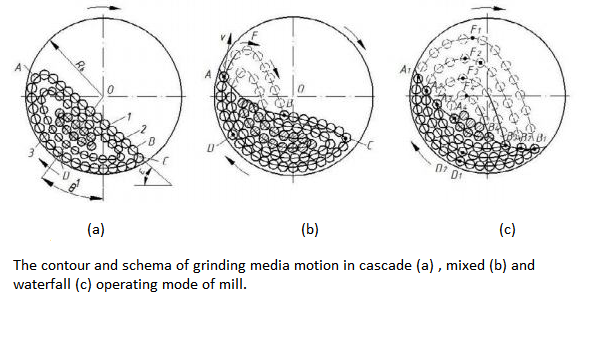
Figure 1: Different modes of grinding media motion within a ball mill: cascading, mixed, and cataracting.
At its core, a ball mill is a rotating horizontal steel cylinder partially filled with grinding media and the material to be ground. As the shell rotates, the grinding media lifts and falls, generating mechanical forces that reduce clinker into fine cement powder. The grinding process primarily relies on two mechanisms, which are key Ball Mill Fundamentals:
Impact Grinding
Impact grinding occurs when grinding balls fall from a height onto clinker particles. As the mill rotates, liners lift the steel balls upward. Eventually, gravity overcomes centrifugal force, causing the balls to fall in a cascading or cataracting motion. When these balls strike clinker, large particles fracture instantly, and coarse feed breaks into smaller fragments, resulting in high-energy collisions that generate rapid size reduction. Impact grinding is particularly dominant in the first chamber of the mill, where larger balls are installed.
The effectiveness of impact depends on:
- Ball size
- Lifting angle
- Mill speed
- Liner profile
- Material bed thickness
If the material bed becomes excessively thick, the impact energy is absorbed by the powder layer instead of the clinker itself. This phenomenon, known as the cushioning effect, drastically reduces grinding efficiency.
Attrition Grinding
While impact handles coarse size reduction, attrition grinding performs the fine grinding work. Attrition occurs when balls slide against each other, roll over particles, and fine particles experience shear forces. This mechanism dominates in the second chamber, where smaller media creates intensive surface grinding. Attrition is essential for achieving target cement fineness and Blaine surface area.
Without sufficient attrition, cement residue increases, separator rejects rise, and product quality becomes unstable. Therefore, both impact and attrition must operate together in a balanced grinding environment.vironment.
2. Critical Speed: A Core Ball Mill Fundamental
Mill rotational speed directly determines grinding efficiency. If the mill rotates too slowly, balls merely roll, resulting in minimal impact and a collapse in grinding efficiency. Conversely, if the speed becomes too high, centrifugal force pins the balls against the shell wall, preventing them from falling entirely. Understanding critical speed is a vital Ball Mill Fundamental.
The theoretical point where centrifugal force equals gravitational force is called the Critical Speed (Nc), calculated as:
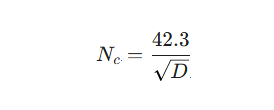
Where:
•$N_c$ = Critical speed (RPM)
•$D$ = Mill diameter in meters
In practical cement grinding applications, mills typically operate at approximately 70–75% of critical speed for closed-circuit cement mills, with slightly lower values for raw grinding applications. This operating range creates the ideal cataracting motion necessary for efficient impact grinding.
3. Internal Components of a Modern Ball Mill
A cement ball mill is more than just a rotating shell; it is an engineered grinding system comprising multiple internal components working in concert. These components are integral to understanding Ball Mill Fundamentals.
Mill Shell
The shell forms the primary rotating body of the mill. Fabricated from heavy steel plates, it is designed to withstand dynamic loading, impact forces, thermal expansion, and vibration stress. Shell deformation can negatively affect gear alignment, bearing loading, and diaphragm positioning, making shell integrity critical for long-term reliability.
Mill Liners
Liners protect the shell while simultaneously controlling grinding dynamics. Their functions include lifting grinding media, protecting shell plates, directing ball trajectory, and influencing grinding efficiency. Different liner profiles produce distinct grinding motions; for example, wave liners improve lifting action, step liners enhance cascading, and classifying liners improve media segregation. Worn liners reduce lifting capability, leading to decreased grinding efficiency and increased power consumption.
Multi-Chamber Design
Most cement ball mills utilize a two-chamber configuration.
First Chamber
The first chamber performs coarse grinding. It is characterized by large grinding balls (e.g., 50-90 mm), high impact energy, and a lower material filling degree. The primary objective here is rapid clinker size reduction.
Second Chamber
The second chamber performs fine grinding. It features smaller grinding media (e.g., 15-25 mm), higher attrition forces, and dense media packing. This chamber is crucial for determining final cement fineness and residue control.

Figure 4: Detailed view of internal and external components of a ball mill.
Intermediate Diaphragm
The diaphragm separates the two chambers. Its functions include controlling material flow, maintaining proper retention time, preventing media migration, and supporting ventilation flow. A poorly designed or blocked diaphragm can lead to excessive mill differential pressure, high circulating load, poor chamber balance, and reduced output, thus strongly influencing mill stability.
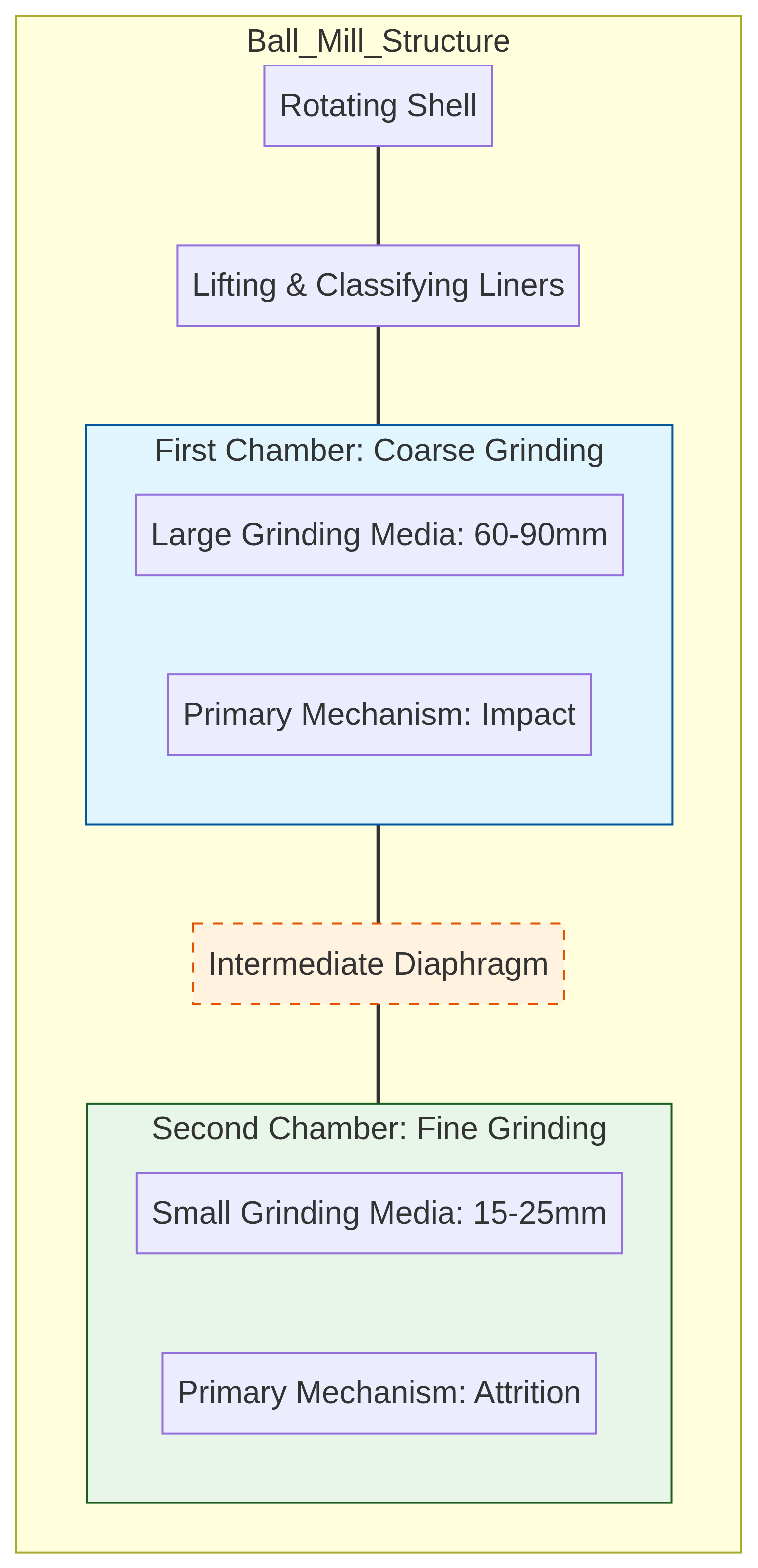
Figure 5: Simplified diagram of a two-chamber ball mill internal structure.
4. The Closed-Circuit Grinding System
Modern cement grinding almost invariably operates in a closed circuit with a separator. Without a separator, fine particles remain inside the mill, receiving unnecessary grinding energy, which wastes power and causes overgrinding. Therefore, the separator plays a decisive role in circuit efficiency, a key aspect of Ball Mill Fundamentals.
High-Efficiency Separator
The separator classifies particles according to size. Its operation is straightforward: fine particles exit as finished product, while coarse particles return to the mill as rejects. This recycle stream is known as the circulating load. Efficient separators improve mill output, cement quality, specific power consumption, and particle size distribution. Modern dynamic separators achieve much sharper separation compared to older static separators.

Figure 6: Schematic of a closed-circuit grinding system with a ball mill and separator.
5. Circulating Load: The Heart of Mill Performance
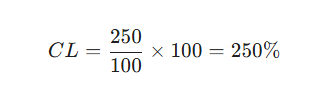
Circulating load represents the ratio of separator rejects returning to the mill versus finished cement produced. Typical cement mill circulating loads range between 200% to 350%. For example, if the mill produces 100 TPH cement and separator rejects equal 250 TPH, the circulating load is calculated as:

An excessively high circulating load creates several problems, including mill overfilling, reduced ventilation, material cushioning, higher power consumption, and lower grinding efficiency. However, an excessively low circulating load is also undesirable because separator efficiency decreases. Therefore, circulating load optimization is a critical balancing act in Ball Mill Fundamentals.
6. Mill Ventilation and Gas Flow
Ventilation is often underestimated in cement grinding systems, yet proper airflow is essential for material transport, fine particle removal, temperature control, and moisture evaporation. Insufficient ventilation can lead to mill coating, elevated temperatures, poor separator performance, and reduced output. Conversely, excessive airflow increases pressure drop and may carry oversized particles into the separator. Effective ventilation is a crucial Ball Mill Fundamental.
Typical ventilation targets include 0.8–1.2 m/s air velocity, proper outlet temperature balance, and stable mill differential pressure.
7. Cement Temperature Control
One of the biggest operational challenges is heat generation. Nearly 95% of the electrical energy supplied to the ball mill converts into heat rather than actual grinding work. Consequently, cement temperature rises rapidly, which can lead to gypsum dehydration, increased false set problems, and bag filter stress. Managing temperature is a vital Ball Mill Fundamental.
To control temperature, plants commonly employ water spray systems, improved ventilation, grinding aids, and separator optimization. Generally, cement mill outlet temperature should remain below 110°C to 115°C. Exceeding this range risks gypsum dehydration into hemihydrate form, which can negatively affect cement setting behavior.
8. Grinding Media Optimization
Grinding media directly influences grinding efficiency. Key optimization factors include ball size distribution, ball hardness, wear rate, and filling degree. A poor media grading can cause reduced impact energy, excessive fine generation, high residue, and increased power consumption. Typical media filling levels are 27%–31% of mill volume. As balls wear down, periodic media sorting and top-up strategies become essential for maintaining optimal performance, highlighting another important Ball Mill Fundamental.
9. Common Ball Mill Operational Problems
Even robust systems encounter operational issues. Understanding these common problems is part of mastering Ball Mill Fundamentals.
Ball Coating
Ball coating occurs when fine particles stick to grinding media surfaces. Causes include excessive moisture, poor ventilation, high temperature, and inadequate grinding aid dosage. The effects are reduced impact efficiency, lower output, and increased power consumption. Grinding aids are commonly used to minimize coating.
Diaphragm Blockage
Diaphragm slots may choke due to coarse particles, agglomeration, or inadequate ventilation. This results in rising mill pressure, reduced throughput, and chamber imbalance. Routine inspection is essential to prevent and address blockages.
High Residue
High residue generally indicates insufficient grinding energy, poor separator efficiency, incorrect ball grading, or an excessive feed rate. Engineers must identify the true root cause instead of blindly increasing separator speed.
10. Energy Efficiency and Process Optimization
Today, energy optimization is a top priority in cement plants. Process engineers continuously focus on lowering kWh/ton consumption, improving separator efficiency, better grinding aid utilization, optimized media loading, and stable feed chemistry. Advanced plants increasingly leverage expert control systems, AI-based optimization, online particle size analyzers, and predictive maintenance systems. This focus on efficiency is a critical aspect of Ball Mill Fundamentals.
However, even advanced automation cannot compensate for weak process fundamentals. A poorly ventilated mill with incorrect media grading will remain inefficient regardless of software sophistication.
Conclusion: Mastering Ball Mill Fundamentals for Optimal Performance
The ball mill remains one of the most important machines in cement manufacturing. Although newer grinding technologies continue to evolve, the ball mill’s simplicity, adaptability, and reliability ensure its continued relevance across the industry. By understanding and optimizing grinding physics, media dynamics, ventilation, separator efficiency, material flow, and temperature control—all key Ball Mill Fundamentals—plants can achieve higher throughput, lower power consumption, stable cement quality, and longer equipment life. Ultimately, successful cement grinding is not about operating the mill harder, but about operating the entire grinding circuit smarter.