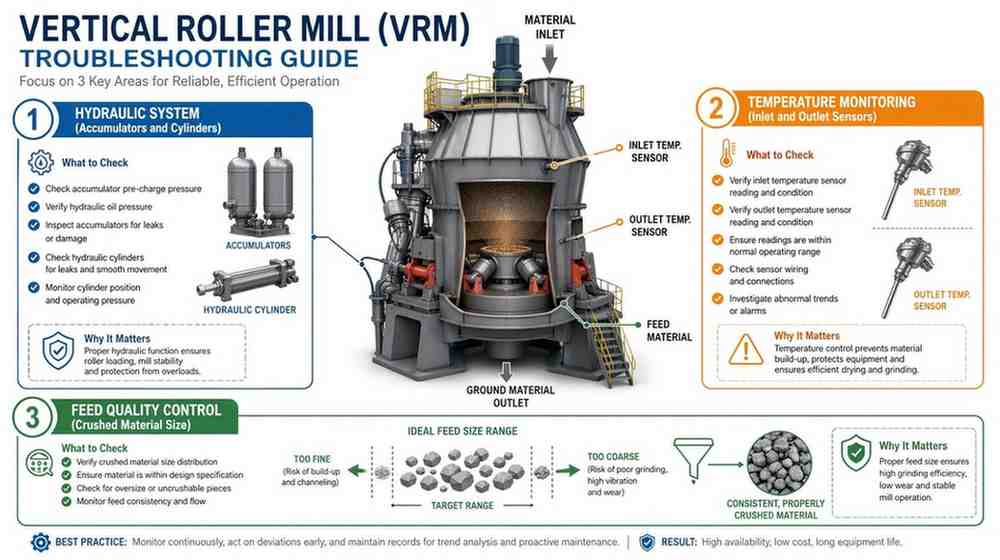
Common VRM Operational Problems Affecting Grinding Efficiency, Output, and Stability
Table of Contents
Vertical Roller Mills (VRMs) are highly efficient grinding systems widely used in industries such as cement, mining, and power generation. They are known for their energy efficiency and high throughput in grinding various materials. However, like any complex machinery, VRMs can encounter operational challenges if not properly maintained or operated. Understanding VRM Efficiency: Root Causes and Solutions is crucial for ensuring stable operation, maximizing productivity, and extending the lifespan of the equipment. This guide delves into the most frequent issues faced in VRM operation and provides comprehensive troubleshooting steps.
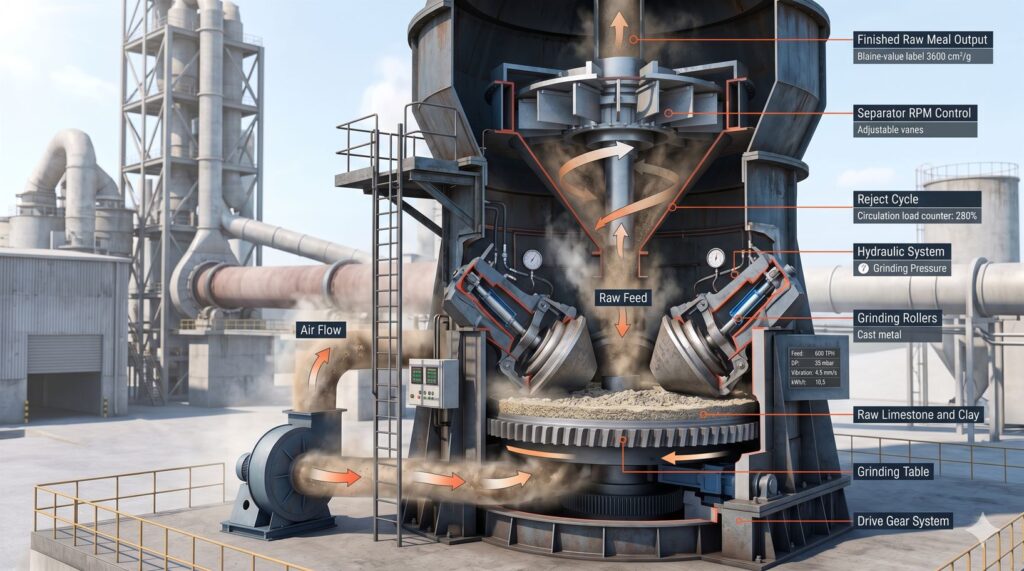
1. Vibration Problem: A Root Cause of Poor VRM Efficiency
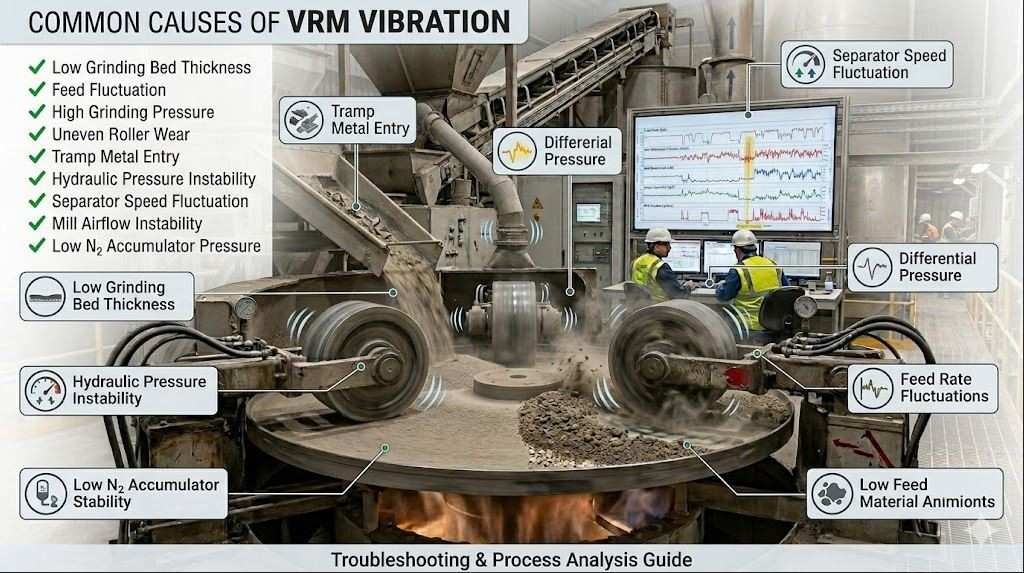
Vibration is one of the most critical issues in VRMs, often indicating underlying operational or mechanical problems. Excessive vibration can lead to premature wear, structural damage, and even catastrophic failure if not addressed promptly, directly impacting VRM efficiency.
Causes:
- Uneven Feed: Inconsistent material supply to the grinding table can lead to an uneven material bed. This causes the grinding rollers to ‘sticking,’ which can significantly reduce grinding efficiency and throughput.
- Insufficient Airflow: The airflow system is responsible for transporting ground material out of the mill and into the separator. If the airflow is insufficient, material can accumulate in the mill, leading to reduced grinding efficiency and lower output.
Solution:
Addressing low output requires careful adjustment of operational parameters and timely maintenance:
- Increase Grinding Pressure: Adjust the hydraulic system to apply optimal grinding pressure to the rollers. This ensures effective comminution of the material. Refer to the manufacturer’s guidelines for recommended pressure settings based on the material being ground.
- Replace/Hardface Worn Parts: Regularly inspect the grinding rollers and table liners for wear. Replace or hardface these components when they show significant wear to maintain the optimal grinding gap and efficiency.
- Tune Separator Settings: Optimize the separator speed and vane angles to achieve the desired product fineness without excessive recirculation. This balance is crucial for maximizing throughput. Regular tuning based on material characteristics and desired product quality is recommended.
- Improve Drying Efficiency: If high moisture is an issue, consider increasing the inlet gas temperature or reducing the moisture content of the feed material. Proper drying prevents material sticking and ensures smooth operation.
- Optimize Airflow System: Ensure the fan speed and damper settings are correctly adjusted to provide adequate airflow for material transport. Regularly inspect ducts and cyclones for blockages or leaks that could impede airflow.
2. Low Output: Addressing VRM Efficiency Challenges
Low output directly correlates with reduced VRM efficiency. This issue can stem from various factors, all of which hinder the mill’s ability to process material effectively.
Causes:
- Separator Inefficiency: The separator is critical for classifying ground material. Worn separator vanes, damaged seals, or incorrect settings can lead to coarse particles bypassing the separation process and being discharged as finished product, resulting in high residue.
- Low Grinding Efficiency: Similar to low output, an excessively large gap between the grinding rollers and the table, or severely worn grinding elements, can result in insufficient grinding, leading to a higher proportion of coarse material.
- High Feed Rate (Overloading): Feeding the mill beyond its rated capacity can overwhelm the grinding and separation systems. This leads to incomplete grinding and inefficient separation, resulting in high residue.
- Internal Leaks/False Air: Unintended air ingress into the mill system (false air) can disrupt the internal airflow patterns, reducing the efficiency of material transport and separation, thereby contributing to high residue.
Solution:
To achieve the desired product fineness and reduce residue, focus on the following:
- Separator Maintenance and Tuning: Regularly inspect and maintain the separator. Replace worn vanes and seals to ensure efficient classification. Optimize separator speed and vane angles based on the desired fineness and material characteristics.
- Grinding Optimization: Ensure the grinding pressure is adequate and the grinding elements are in good condition. Adjust the roller height to maintain the optimal gap between rollers and table for effective grinding.
- Control Feed Rate: Maintain a stable feed rate that is within the mill’s design capacity. Avoid overloading the mill, as this compromises both grinding and separation efficiency.
- Seal Leaks: Conduct regular inspections for air leaks in the mill housing, ducts, and other connections. Promptly seal any leaks to maintain the integrity of the internal airflow system.
3. High Residue: Impact on VRM Efficiency
High residue, or poor product fineness, indicates that the VRM is not effectively grinding the material to the desired specifications. This can lead to quality issues in the final product and increased energy consumption due to recirculation, significantly impacting overall VRM efficiency.
Causes:
- Separator Inefficiency: The separator is critical for classifying ground material. Worn separator vanes, damaged seals, or incorrect settings can lead to coarse particles bypassing the separation process and being discharged as finished product, resulting in high residue.
- Low Grinding Efficiency: Similar to low output, an excessively large gap between the grinding rollers and the table, or severely worn grinding elements, can result in insufficient grinding, leading to a higher proportion of coarse material.
- High Feed Rate (Overloading): Feeding the mill beyond its rated capacity can overwhelm the grinding and separation systems. This leads to incomplete grinding and inefficient separation, resulting in high residue.
- Internal Leaks/False Air: Unintended air ingress into the mill system (false air) can disrupt the internal airflow patterns, reducing the efficiency of material transport and separation, thereby contributing to high residue.
Solution:
To achieve the desired product fineness and reduce residue, focus on the following:
- Separator Maintenance and Tuning: Regularly inspect and maintain the separator. Replace worn vanes and seals to ensure efficient classification. Optimize separator speed and vane angles based on the desired fineness and material characteristics.
- Grinding Optimization: Ensure the grinding pressure is adequate and the grinding elements are in good condition. Adjust the roller height to maintain the optimal gap between rollers and table for effective grinding.
- Control Feed Rate: Maintain a stable feed rate that is within the mill’s design capacity. Avoid overloading the mill, as this compromises both grinding and separation efficiency.
- Seal Leaks: Conduct regular inspections for air leaks in the mill housing, ducts, and other connections. Promptly seal any leaks to maintain the integrity of the internal airflow system.
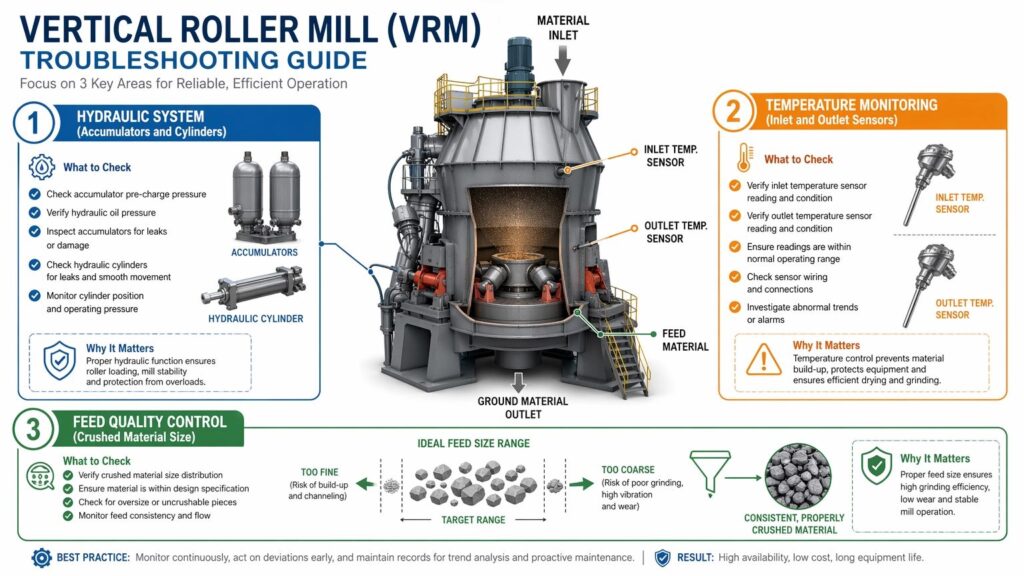
4. Excessive Wear: A Major VRM Efficiency Concern
Excessive wear of grinding components is a significant operational challenge in VRMs, leading to increased maintenance costs, downtime, and reduced efficiency. It is primarily influenced by the characteristics of the material being ground and operational practices, directly affecting VRM efficiency.
Causes:
- Abrasive/Hard Material: Grinding highly abrasive materials (e.g., high silica content) or very hard materials (e.g., clinker) naturally accelerates the wear rate of grinding rollers and table liners.
- High Grinding Pressure: While adequate grinding pressure is necessary for efficiency, excessively high pressure can lead to increased friction and stress on wear parts, accelerating their degradation.
- Inadequate Lubrication: Improper or insufficient lubrication of bearings and other moving parts can lead to increased friction, overheating, and premature mechanical wear, not just on grinding elements but throughout the mill’s mechanical system.
- Metal-to-Metal Contact: As discussed under vibration, direct contact between grinding rollers and the table due to an unstable material bed or running empty causes rapid and severe wear.
Solution:
Managing excessive wear involves material control, proactive monitoring, and proper maintenance:
- Material Control: Where possible, blend materials to manage the overall abrasiveness of the feed. For extremely hard materials, consider pre-crushing or selecting wear-resistant materials for mill components.
- Wear Monitoring: Implement a robust wear monitoring program using tools like ultrasonic thickness gauges to track the wear rate of grinding rollers and table liners. This allows for predictive maintenance and timely replacement or hardfacing.
- Hardfacing and Material Selection: Utilize wear-resistant materials (e.g., high-chromium alloys) for grinding elements. Hardfacing techniques can extend the life of rollers and liners by applying a wear-resistant layer.
- Optimize Grinding Pressure: Operate the mill at the optimal grinding pressure, balancing grinding efficiency with wear rates. Avoid unnecessary high pressures.
- Strict Lubrication Schedule: Adhere strictly to the manufacturer’s lubrication schedule and use recommended lubricants. Regular and proper lubrication is vital for the longevity of bearings and other mechanical components.
5. Hydraulic System Instability: Root Cause of VRM Efficiency Loss
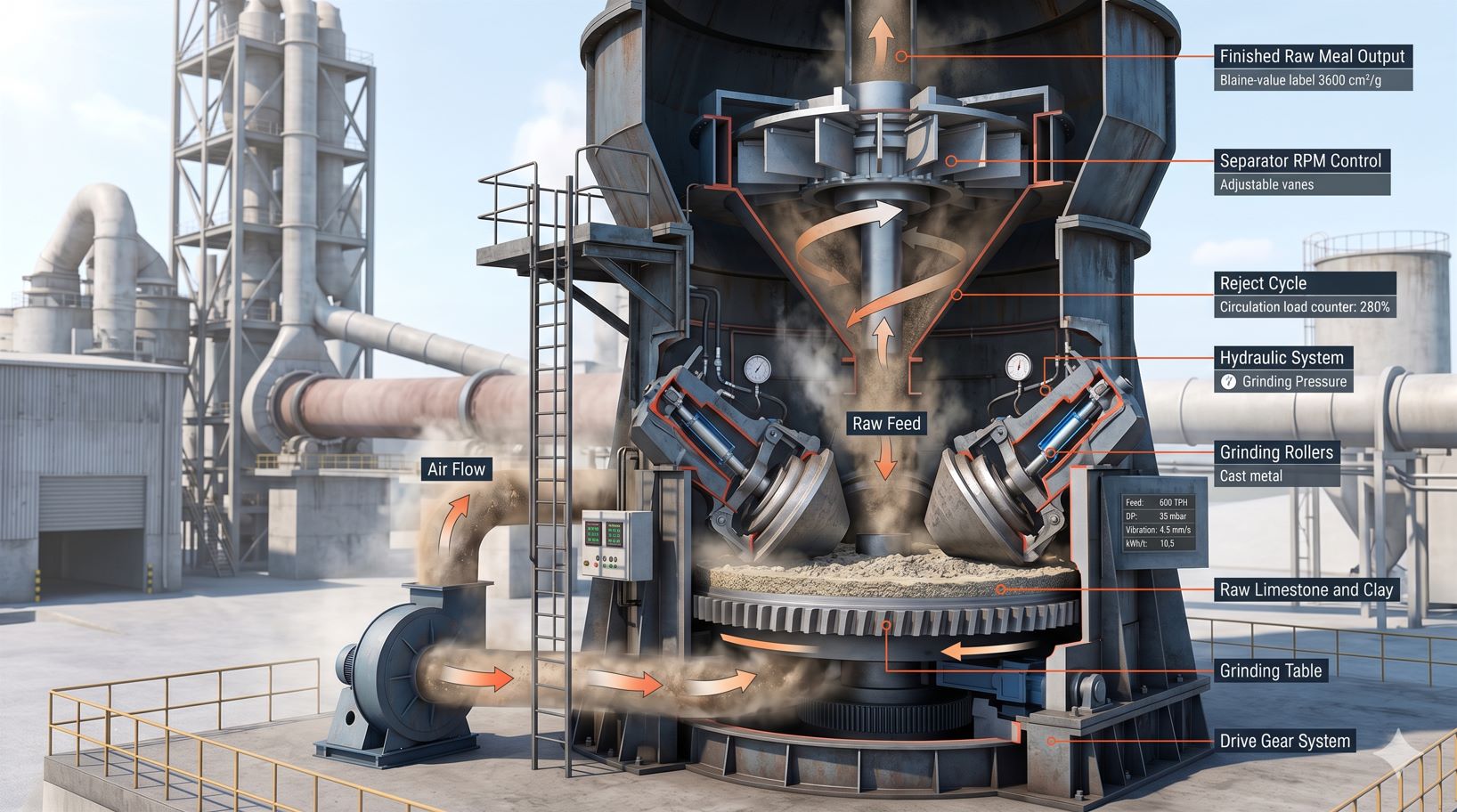
The hydraulic system is responsible for maintaining the grinding pressure—the force that allows the rollers to pulverize material. When the pump cycles frequently, the system is struggling to maintain a constant “cushion” of pressure, which is a significant root cause of VRM efficiency loss.
Engineering Analysis: The Hydraulic Accumulator’s Role
The hydraulic accumulator acts as a shock absorber. When the gas pre-charge pressure is lost, the hydraulic fluid has no medium to compress, forcing the motor to cycle on and off constantly to compensate for minor pressure drops.
Preventive Action:
- Accumulator Integrity: Conduct a quarterly check of the nitrogen pre-charge pressure.
- Internal Bypass: If cycling continues, check for leaking internal check valves in the hydraulic power unit (HPU).
- Instrumentation: Ensure the pressure switches are not “hunting” due to electrical noise or poor calibration.
6. The Impact of Temperature on Grinding Stability and VRM Efficiency
Temperature control is vital for grinding efficiency and system safety. Indeed, high temperatures can cause premature bearing failure and negatively affect the chemical properties of certain cement additives, directly impacting VRM efficiency.
Engineering Analysis: The Overheating Chain Reaction
When a mill overheats, it initiates a technical chain reaction that compromises the entire process:
- Reduced Air Density: High temperatures decrease the density of the internal air. Consequently, this reduces the buoyancy and lifting capacity of the gas stream.
- Increased Internal Recirculation: Since the air cannot effectively lift the ground material to the separator, particles drop back onto the grinding table prematurely. This creates a “thick bed” that is merely being churned rather than ground.
- Bed Height Instability: As more material falls back, the bed height increases, forcing the rollers to “float.” As a result, the hydraulic system must work overtime to maintain pressure, causing the pump to “hunt” or cycle frequently.
- Vibration Surge: This unstable bed creates an uneven pressure distribution. Therefore, the rollers begin to bounce, which triggers vibration sensors and potential emergency shutdowns.
- Rejects and High Residue: Because the separator is overwhelmed by the massive internal load, it cannot classify efficiently. Ultimately, coarse particles are forced into the product stream, leading to the high residue mentioned earlier.
Preventive Action: Precision Control Levers for VRM Efficiency
If operators detect a “temperature change,” they should avoid simply increasing the feed rate, which often leads to a mill choke. Instead, they should utilize these specific levers:
- Evaporative Cooling (Water Injection): This is the most effective way to “break” the loop. By injecting water into the mill inlet, you immediately increase the cooling capacity and mass flow without altering the solid feed rate.
- Separator Speed Adjustment: In the event of high internal circulation, temporarily increasing the separator speed can help “suck out” fines more aggressively. This reduces the volume of material dropping back onto the table.
- Dampers and Gas Bypass: If the inlet temperature is too high due to kiln or gas generator output, using the cold air bypass damper is essential. Furthermore, this action protects internal seals and critical lubrication systems.
7. Feed Material Size & Heterogeneity: A VRM Efficiency Factor
The VRM is designed to handle a specific feed envelope. When the feed material contains oversized lumps or high levels of hardness (High Bond Work Index), the mill’s grinding bed becomes unstable, directly impacting VRM efficiency.
Engineering Analysis: Impact of Material Characteristics
Large rocks cause “pivoting” of the rollers, leading to massive vibration and potential damage to the roller swing arms. If the material is too hard, the specific power consumption (kWh/ton) will spike.
Preventive Action:
- Upstream Crusher Audit: The performance of your VRM is only as good as the feed it receives. Regularly check the hammer wear in your primary impact crusher.
- Feed Quality Filtering: Ensure that magnetic separators are functioning to remove tramp metal (mill balls or steel shards), which can cause catastrophic damage to the grinding table liners.
Conclusion: Mastering VRM Efficiency
Vertical Roller Mills (VRMs) are highly efficient systems; however, their performance relies heavily on precise operation and maintenance. Common issues like vibration and high residue frequently occur because of uneven feed or unstable grinding beds. Furthermore, temperature spikes can create a negative chain reaction, which ultimately destabilizes the bed and increases reject rates, all of which are critical VRM efficiency root causes.
To counter these challenges, operators must maintain balanced process parameters. For instance, using water injection helps control temperature, while optimizing airflow ensures product fineness. In addition to these adjustments, regular monitoring is essential to prevent hydraulic instability. Ultimately, by addressing these VRM efficiency root causes and solutions promptly, VRMs can achieve higher productivity and a significantly extended lifespan.
2 thoughts on “VRM Optimization in Cement Plant: Reduce kWh & Mill Vibration”