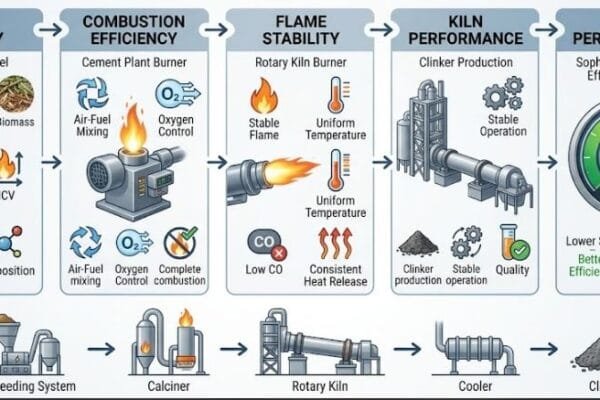
Does Higher TSR Always Reduce SHC in Cement Plant infographic showing relationship between Thermal Substitution Rate, Specific Heat Consumption, AFR quality and kiln efficiency.

How Higher TSR Affects Specific Heat Consumption (SHC) in Cement Plants?

One of the most common misconceptions in cement manufacturing is that increasing Thermal Substitution Rate (TSR) will automatically reduce Specific Heat Consumption (SHC). In reality, a higher TSR does not always mean lower thermal energy consumption. While increasing TSR can reduce fossil fuel consumption and improve sustainability performance, its impact on SHC largely depends on…
Read More
What is Thermal Substitution Rate (TSR) in Cement Plants?

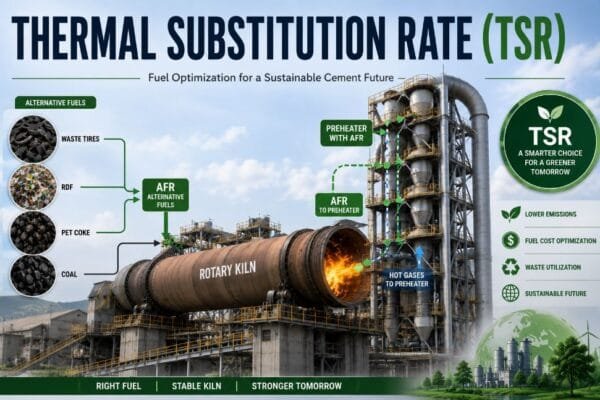
What is Thermal Substitution Rate (TSR) in Cement Plants?

Formula, Calculation, Benefits, and Challenges Explained Thermal Substitution Rate (TSR) is one of the key performance indicators (KPIs) used in modern cement plants to measure the contribution of alternative fuels in the kiln firing process. With increasing fuel costs, environmental regulations, and the need to reduce CO₂ emissions, cement plants are focusing more on Alternative…

Read More
Air-to-Cloth Ratio

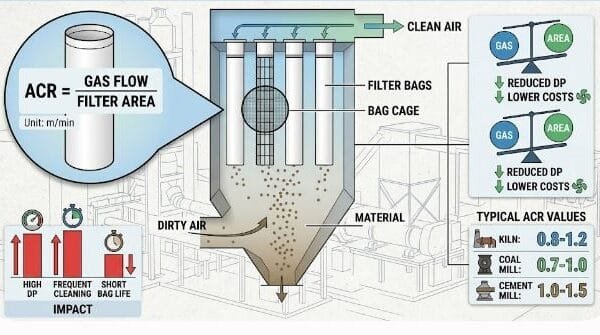
Air Cloth Ratio (ACR) in Baghouse

The Hidden Parameter Behind Efficient Baghouse Performance in Cement Plants In cement plants, baghouse performance is often judged by parameters such as Differential Pressure (DP), stack emissions, pulse cleaning frequency and fan power consumption. While these parameters indicate the operating condition of the baghouse, they do not always reveal the root cause of performance deterioration….

Read More