

Similar Posts
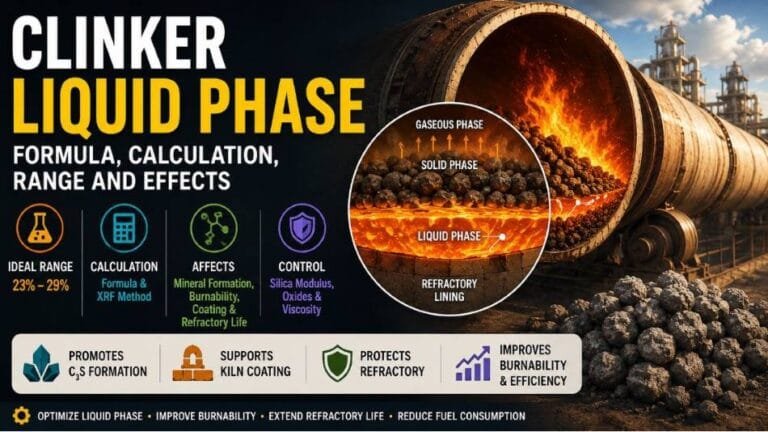
Clinker Liquid Phase: Importance, Calculation Formulas and Effects on Kiln Operation
Uncover the critical role of the clinker liquid phase in cement manufacturing, learn essential calculation formulas, and discover how it directly dictates rotary kiln stability, burnability, and coating health.
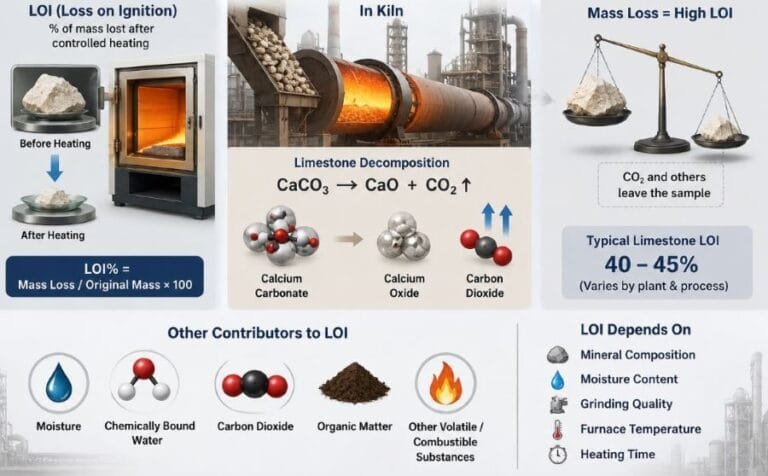
Loss on Ignition in Cement: Calculate Raw Mix Losses Accurately
Master Loss on Ignition (LOI) calculations for cement raw mixes to accurately account for moisture and calcination losses, ensuring precise kiln feed quality and stoichiometric balance.
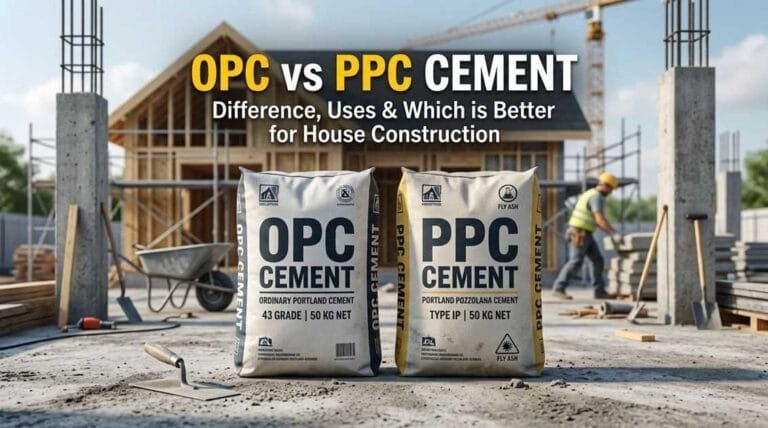
What is the difference between OPC and PPC cement?
Compare Ordinary Portland Cement (OPC) and Portland Pozzolana Cement (PPC)—discover the core differences in composition, setting time, durability, and applications to choose the best cement for your construction project.
How Clinker Quality Affects Cement Mill Performance
Discover how clinker properties like liter weight, crystal size, and burnability directly impact cement mill grindability, energy consumption, and overall grinding efficiency.
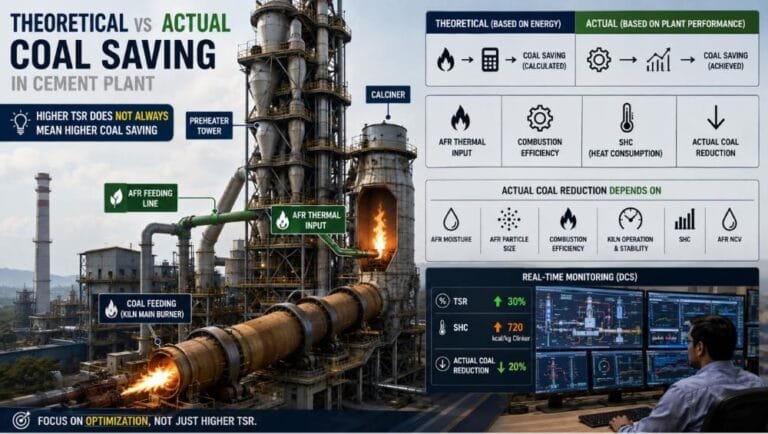
How Much Coal Can TSR Save?
Discover the real-world coal substitution potential of Tire Derived Fuel (TSR) in cement plants, and learn how burning scrap tires impacts thermal energy, kiln stability, and fuel cost savings.
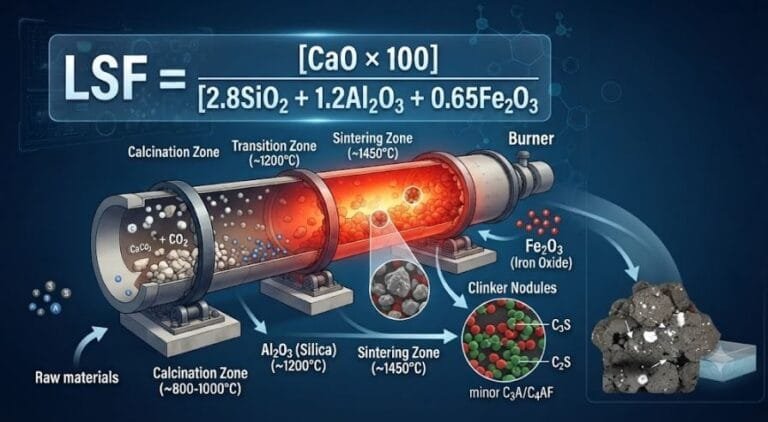
Lime Saturation Factor in Cement: LSF Formula, Range, and Effects on Clinker
Master the Lime Saturation Factor (LSF) in cement manufacturing—learn the essential formula, ideal operational ranges, and how it directly controls clinker mineralogy, burnability, and strength.